Showing posts with label near-death experiences. Show all posts

August 3, 2020

What We Don't Want to Think About


In order to delay my seemingly inevitable slide into terminal torpor, I have taken up a new form of exercise that I commend to you all: reading. Of course, you may have heard of this delightful avocation: I can't claim that it is an original discovery. But if my life has entered a stage where dullness is my daily bread, I can tell you that lately I have been feasting on some books that are anything but dull. They are the fuel for my mind that happily distracts me from the sorrows of my body and also keeps me from over-indulging in the unpalatable pap that the cable news networks feed us every day to induce gloom and despair.

Just last night, for instance, I finally finished another tome – this one ran to more than 700 pages – by one of my favorite authors, Mark Helprin, whose books I have extolled in previous blogs. This novel, which he called In Sunlight and in Shadow, is not one of his best – I would give it four stars – but it has plenty of excitement and, like all of his books, is beautifully written, as you would expect from such a master stylist as Helprin. Perhaps too beautifully written in some ways, but then this is not meant to be a book review. Nevertheless, I need to tell you a little about the story in order to lay the groundwork for what will follow. 

The novel is set in 1946 in New York – the book is in part a rapturous hymn to the city where the author was born – a year after the ending of World War II. The hero of the story, Harry Copeland, spent four years in the war, in Europe, as a paratrooper. The book has a complex plot, which I won't attempt to summarize, but the chapters that deal with Copeland's time in battle are incredibly gripping; the author makes you feel you are there with Copeland, surrounded not just by ever-present danger, but with death all around as he sees some of his buddies die. Helprin's writing about war (and he has been a soldier himself), especially in his greatest novel, A Soldier of the Great War, is, to my mind, supreme among contemporary American novelists. You don't just read Helprin's novels; you live them.

So, yes, reading and living in Helprin's world for so long did bring a great deal of excitement, however vicarious, into mine. And the effects linger. After you put his books down, they leave their mark on you.

Still, it is not Helprin I want to write about here. Instead, I want to introduce you to another writer who I suspect not many of you have ever heard of, much less read. His name is Gregor von Rezzori. (I do not hear many bells ringing.)   

Gregor, as I shall call him (though he was Gricha to his friends), was not just an outstanding novelist; he was a phenomenon. In addition to his work as a novelist, he was a memoirist, author of radio plays, screenwriter as well as a film actor (he appeared in films with such well known actors as Jeanne Moreau, Brigitte Bardot, Anna Karina, Marcello Mastroianni and the French singer, Charles Aznavour), journalist, visual artist, art critic and art collector. He was fluent in many languages, too, including German, Romanian, Italian, Polish, Ukrainian, Yiddish, French and English. 

What a guy, eh? Apparently, the only art he didn't master was that of archery.

He was born in 1914 – the year World War I began – in a little town near the Carpathian Mountains in what is now Romania, but not far from Ukraine. (Before the collapse of the Austro-Hungarian empire, he and his family thought of themselves as Austrians.) As you can tell by the "von" in his name, his family was reasonably well-to-do, though not wealthy. But they had servants, and little Gregor grew up with a nanny, a peasant named Cassandra, to whom he was very close.

I will not take the time to trace his career, which took him to Vienna, Bucharest, Berlin (where he was during World War II), Paris, and, ultimately, to Italy where he died, much beloved, in 1998. 

I first heard of him when reading about him in an essay by  a charming French writer, Emmanuel Carrère, of whom I am a fan. It was in that essay that I read about an article that had first brought him international fame when it was published as a story in The New Yorker in 1969. Subsequently published as a book entitled Memoirs of an Anti-Semite, I was intrigued by its title, so I immediately ordered it.

It's not what you think. Gregor is not an anti-Semite. His book consists of an interlocking series of five very powerful stories in which the main character (never the same person) has a fateful and often devastating encounter with a Jew. The book packs a wallop and is really designed to show how the kind of casual everyday anti-Semitism that was rife in Europe between the wars, and so quietly but fatally insidious, was the tinder that would soon be ignited and cause the Holocaust that was to follow. Knowing what was to come, as the characters in the book do not, one reads it with a shudder.

That book got me hooked on Gregor, so I ordered one of his autographical books, and it's really that book, or rather one incident in that book, that I want to focus on now. It's one that will also finally begin to put this essay into focus for you and give you your second clue as to what it's all about.  

When Gregor was about eight something happened to bring his childhood to a close. I will let him describe just what occurred to him at that time. It concerns his magpie.   
My magpie died. One afternoon she lay dead in her cage. That very morning she had been hopping around gaily as ever. I could not believe that this cold and rigid piece of rubbish that lay in the sandy gravel at the bottom of her cage was she. I trembled with sorrow. My sister was all eagerness to arrange a funeral, but Cassandra with bewildering roughness forbade any such un-Christian nonsense and saw to it that the little corpse was discarded with the garbage. In doing so, she was seconded by my mother, who thought the magpie died of tuberculosis and might possibly infect us; this only increased my grief. For the first time, Cassandra was not my ally. My lamentations were for naught. Cassandra remained peremptory, as if faced by the unavoidable fact of life and death, her unbroken peasant sense of reality revolted against citified fussing. "Dead is dead," she said gruffly. "One day you will be dead."
Had she said what surely I had heard before – "You too will have to die one day" – it would have remained abstract. When hearing such sentences, comprehension glanced off from the purely verbal, but "being dead" meant what was clearly manifest by the bird's corpse on the garbage heap. I understood.
Terror struck at me like a dead weight. I saw myself stretched out on my bed, rigid and cold, rubbishy in my cements, rotting underneath, something to be discarded as quickly as possible, like the dead magpie. Around me stood my sobbing family. I saw the hearse carrying me away and, behind, my sister in black veils, triumph in her eyes dutifully red from crying. I saw my grave and my dog refusing to leave it. All this was unavoidable, inescapable. It could happen tomorrow or many years on – but it had to happen, and against that no revocation or merciful exception was possible. I was overcome with great fear … Wherever I would go, this fear would go with me. This death fear would henceforth be with me, inextinguishably and forever, and would hollow out my whole being.  
In my utter despair I asked Cassandra whether this was truly so. Cassandra was incorruptible. "Everything has to die," she said. "Your father, too, and your mother and your sister, and I too, we all have to die one day!" And I knew she was telling the truth: Cassandra, the seeress.
And, of course, it's just that that we don't want to think about. Not just death in the abstract, but the ineluctable fact that that we – that you – are going to die. And with the doomsday cloud of COVID hanging over us, maybe sooner than you had ever thought. Sure, no one wants to think about death, especially dying as a result of contracting COVID, which, from all we have heard and seen, is an absolutely horrible and frightening way to die. Why think about such a terrifying specter? Things are bad enough without frightening ourselves – pardon the black pun – to death.

But, be honest, how can we avoid doing so when every day on MSNBC or CNN or the nightly national news we are bombarded with the latest number of people who have died in the U.S.? Every day now, another thousand or so, as the number of the dead climbs beyond 150,000, with no end in sight. As I wrote in my last blog, "Death is all around us and, literally, in the air."

Obviously, there is no way we can really avoid this subject, but there is another way to think about it. And in the rest of this essay, I would like to offer one for your consideration. In effect, it is my reply to little Gregor's anguished cry of despair after he learns that he, too, will die. 

Two Perspectives on Death

Consider the way most of us over the age of thirty were socialized, consciously or not, to think about death. Perhaps our first exposure to death was like Gregor's – the death of a beloved pet. Or to human death by overhearing a whispered conversation about the death of a family member. Or to take a more traumatic example, we might have been involved in an automobile accident in which one of our companions was killed. As a result, the searing memory of this person's shattered and bloodied body, lying partially covered by a blanket on the roadside, might thereafter be the origin of a powerfully charged image of death.

It is hardly necessary to resort to further such situations to appreciate how we are typically educated to understand death. Plainly, we learn to view death from the outside. We are always spectators to death; obviously, we think, we can never experience our own death – we can only imagine it. Thinking of death in this way, as our example from little Gregor shows, it is natural to fear it, even to be repulsed by it, and to avoid the subject as if it were still under some kind of dreaded cultural taboo.

Consider next, however, the understanding of death suggested by near-death research. This is an interior view of death. It is based on the direct experiences that many thousands of people have reported when they almost die, or when they do die clinically. The great unanimity of these testimonies means that there is now a consensus emerging concerning what it is like to die. And what these near-death experiencers are telling us is that the external view of death is only a part of the story, and hardly the whole picture. What death looks like to an external observer is not what it feels like when you go through the process of dying.

Let's pause to consider a couple of representative illustrative accounts of what it's like to experience death.
This INCREDIBLE feeling of peace [came] over me ... All of a sudden there was no pain, just peace. I suppose it's because it's so completely unlike anything else that I've ever experienced in my life that I've got nothing to compare it to. A perfectly beautiful, beautiful feeling ... to me, there's a definite feeling of sunlight and warmth associated with this beautiful feeling. But when this feeling of peace came over me, I was warm. I felt warm, safe, happy, relaxed, just every wonderful adjective you could use ... This was perfection, this is everything anyone could possibly want and everything I could possibly want.
... the thing I could never – absolutely never forget is that absolute feeling of peace, joy, or something ... I remember the feeling. I just remember this absolutely beautiful feeling. Of peace ... and happy! Oh! So happy! ... The peace ... the release. The fear was all gone. There was no pain. There was nothing. It was just absolutely beautiful! It was a feeling that I think everybody dreams of someday having. Reaching a point of ABSOLUTE peace.
The literature on NDEs is now replete with many accounts of the kind I have just quoted. You can find them in any number of books on the subject. Some of the best collections of NDE cases that I know are in books like David Sunfellow's The Purpose of Life or Jeff's Janssen's 10 Life-Changing Lessons from Heaven.

Again, it is not necessary to multiply such testimonies to understand how this interior view of death can become a potent anodyne to many people who are either facing death themselves or who have to cope with the death of a loved one. To know that there is indeed more to death than meets the eye and that what cannot be seen is a kind of perfection that must be understood is to have great peace of mind in the presence of death.

Of course, all this does not banish the undeniable fact that the process of dying itself – which we know in cases of COVID-caused death can be ghastly beyond words – can often be difficult to bear for the dying person. The interior view of death supplements – it does not supplant – the external perspective. But when death finally comes, if we can trust the accounts of NDErs, all the pain vanishes, and the person is then suffused with a feeling of peace, joy and homecoming that even the greatest poet would be unable to capture in the net of words, however sublime.   

What NDEs Teach Us About What Life Is

There is more, much more, we can learn from accounts of NDEs, and not just about death.  Consider the implications from one NDEr, Joe Geraci, whom I knew well when I was teaching at the University of Connecticut. During Joe's NDE he recounts that for him it was...
A total immersion in light, brightness, warmth, peace, security ... I just immediately went into this beautiful bright light. It's difficult to describe; as a matter of fact, it's impossible to describe. Verbally, it cannot be expressed. It's something which becomes you and you become it. I could say, "I was peace, I was love." I was the brightness, it was part of me ... You just know. You're all-knowing – and everything is a part of you – it's just so beautiful.

It was eternity. It's like I was always there and I will always be there, and my existence on earth was just a brief instant.
I have often reflected on these last words of Joe's. I have now lived well into my eighties – much longer than I had ever expected. I have had a long and very full life. And yet from the perspective of NDEs, I have just descended from an eternal realm to dip my toes into the sands of time for what seems to be all these years, only to return to that eternal realm, my true home, from which my life will seem just like a blip in time.  

Whoa! When I think about my life from this perspective – or when you think about yours – what is life, and what is death? It's not just that death is not what it seems, but  neither is life. From this point of view, death is an illusion and life is a kind of dream from which physical death awakens us. According to NDErs like Joe, we are living in a dream world.

Consider these testimonies from other NDErs. I know most of these people myself, or in the cases of all but one am very familiar with their writings. But I am indebted to David Sunfellow for extracting these excerpts for me.
When I recovered, I was very surprised and yet very awed about what had happened to me. At first all the memory of the trip that I have now was not there. I kept slipping out of this world and kept asking, "Am I alive?" This world seemed more like a dream than that one.


I knew that I'd been underwater too long to be alive, but I felt more alive than I've ever felt. It all felt more real than anything has felt on earth.


And yet the more I went over my medical records and my experiences with my doctors, the more I came to realize that there is no way that this brain, so devastated by bacterial meningitis, could have manufactured any of that. It should have been a state of nothingness, with the near-destruction of my neocortex. And yet it was much more like the blinders coming off and an awakening to a far richer, more vibrant and alive reality than the one in this world.


It is impossible to convey the beauty and intensity of emotion during those visions. They were the most tremendous things I have ever experienced. And what a contrast the day was: I was tormented and on edge; everything irritated me; everything was too material, too crude and clumsy, terribly limited both spatially and spiritually. It was all an imprisonment, for reasons impossible to divine, and yet it had a kind of hypnotic power, a cogency, as if it were reality itself, for all that I had clearly perceived its emptiness.


Suddenly, not knowing how or why, I returned to my broken body. But miraculously, I brought back the love and the joy. I was filled with an ecstasy beyond my wildest dreams. Here, in my body, the pain had all been removed. I was still enthralled by a boundless delight. For the next two months, I remained in this state, oblivious to any pain.

Although it's been 20 years since my heavenly voyage, I have never forgotten it. Nor have I, in the face of ridicule and disbelief, ever doubted its reality. Nothing that intense and life-changing could possibly have been a dream or hallucination. To the contrary, I consider the rest of my life to be a passing fantasy, a brief dream, that will end when I again awaken in the permanent presence of that giver of life and bliss.

In this short essay, we have traveled a long way from the writings of Mark Helprin and Gregor von Rezzori that treat death as something vividly and frighteningly real after which we came to the findings of NDE research from which death can be seen from still another perspective in which it has the face of the Beloved. Such a view can, I believe, be profoundly reassuring in these days of COVID because it makes it clear that however terrible death may appear, it is not what it seems, or, more accurately, not only that.

But, finally, when we arrive at testimonies like that of Joe Geraci and the other NDErs I have cited, we find that life is apparently not what it seems either. However "real" it appears to our senses, we are victims of a kind of delusion. In fact, we are living in a dream world and it is only when we die that we awaken from the dream into true life.

July 27, 2020

Remembrance of Friends Past


I haven’t been in a blog-writing mood of late. And why?

Well, for one thing, what else is there to say about life under COVID? Surely, by now most people are tired of hearing about it, and of course the news concerning the increasing spread of the virus is depressing, even frightening. Who needs more of that? But I’ve had my own personal reasons. I’ve seemingly lost the knack of sleeping and have been exhausted most of time. Instead of writing blogs, I mope. But who wants to read about Ken’s troubles? You have enough of your own, and probably in many cases, they are worse. Besides, I am loath to inflict upon you what I call TOMS: Tedious Old Men’s Syndrome.  

So let’s talk about something else, although to begin with, you might find this a bit depressing, too. But, hang on, it won’t remain that way. 

The other day I found myself thinking about Boccaccio's The Decameron. As you probably remember, he wrote it during the period of the Black Death in Europe when so many people were dying. Our situation isn’t anything nearly so dreadful as that time, of course, but for most of us it is bad enough. But whether we are talking about a plague or a pandemic, we are haunted by the specter of death. Death is all around us and, literally, in the air. Just in the United States as I write this, almost 150,000 people have died, and many more will die before this pandemic subsides, even if – unlike President Trump’s roseate make-believe fantasy -- it will probably never disappear altogether.

Well, alas, as you may have noticed, I ain’t no Boccaccio. I wish I could distract you from all this by telling you ribald tales of randy men, sportive ladies and fatuous priests, but regrettably, I no longer move in these circles. And as you may remember, because of my spinal stenosis, I hardly move at all. Instead, these days I am mostly a barely ambulatory insomniac. 

But I can at least tell you what you can look forward to if you attain a venerable age as I have. First, you will become an orphan because your parents will die. And then, you will find your friends and relatives disappearing as they take up residence off-planet and no longer text you or answer your e-mails. And even those friends who remain will be, like mine, riddled with disease and other infirmities while they diligently work toward their own mortality.  

I remember years ago reading a short story by John Updike in which the elderly commentator laments to his wife that when they were young and zesty, the gossip was all about who was sleeping with whom and who was the latest couple to split up. Now, he went on to say, it was who had landed in the hospital or had just died. From weddings to funerals until it was time for one’s own.

Well, friends, that’s life – and death. Nothing new there, but when you’re old, it has a certain poignancy. Which is why these days, I like to remember certain of my friends who have died in recent years. I miss them, sure, but it makes me happy to recall our friendships and the times we spent together. And it beats complaining about one’s lack of sleep and other troubles.  

Can I share some memories of a few of my now dead but not forgotten friends with you? I hope you might enjoy meeting them, in absentia, of course, before you have to return to your own quotidian concerns. 

Sukie

Her real name wasn’t Sukie either, but that’s what everyone called her. We were the dearest of friends for almost thirty years. Sukie was the funniest person I ever knew. She was a riot. She could have made her living as a stand-up comedian, but she settled for being a therapist.

At one point, when we were both living in California, Sukie had to have a kidney transplant. It was a very fraught time for her, and the next year of recovery was hell for her. But she survived and lived for some years afterward, spending the last years of her life in Brazil.

As I mentioned, Sukie was a therapist and workshop leader whose work affected many people and who was widely loved. After her death, many tributes poured in, including one from the woman who had donated one of her kidneys to Sukie.

I wrote her this letter:
Dear Cynthia,

I knew Sukie a long time. I first met her in New York, probably in the late 80s, at the suggestion of Michael Murphy, the co-founder of Esalen. I was then a professor at the University of Connecticut. At that time she was living on 63rd St., and we hit it off immediately and became great friends. We spent most of our time gossiping and laughing and talking about death — she was into her afterdeath research then and since I had specialized in doing research and writing about near-death experiences, we had a lot to discuss. She was one of the funniest persons I had ever met, and she often had me splitting my gut (not necessarily spilling them) listening to some of her anecdotes. In those years, she would often put me up when I was visiting New York and we had a ball.  

After she moved to California, we didn’t see each other that much of course, but I sometimes came to California to give talks and to see some of my own other friends and family and would see her then. But she encouraged me to move back here (I grew up in the San Francisco Bay Area) and eventually I did — in late ’96 — so our friendship resumed then. At that point, she was living up near Petaluma. We continued our gossip, this time mostly around her pool, and talked about our work, too, of course. To welcome me to California, she was kind enough to give me one of Amos Ferguson’s paintings, which still hangs in my bedroom. She was a great connoisseur of Caribbean art, and Amos was one of her discoveries.  

I remember when she got sick with her kidney problem and how she mobilized everyone in the world to search for one that could be donated. I never knew who did (perhaps she told me, but I don’t think so). But obviously it was you who gave Sukie so many more years to live. But that time, as you must know, was hell for her, and afterward, it was hell of another kind for a long time. Nevertheless, she never lost her sense of humor, and she was a fighter all the way. So eventually she got better and became more or less her old self. Our contacts continued until she left to live in Brazil. Her life here had come pretty much to a standstill and, though she had some trepidation, naturally, about moving to Brazil, we all wished her well. I think I only saw her once or twice afterward on her visits back. But, as you know, Sukie, who was dyslexic, wasn’t a writer. So gradually we pretty much lost touch with each other once she was settled into her life in Brazil and I didn’t hear again from her for some years.

She is someone I will never forget — a colorful, wonderful, funny-as-hell inimitable person, and a gossiper nonpareil. It was a blessing to know her, and I’m sure once she recovers her wits she will have them laughing in the aisles in her new residence.

Thank you again for all you did to keep her in this world for so long.
Bill

I hardly have any friends from "the days of youth." Even most of those I knew in college or graduate school disappeared long ago from my life or have died. But Bill was one that I actually reconnected with after I moved back to California. By then, we had almost nothing in common, but, still, it was good to see him and he actually looked much the same except for having lost his hair. And, alas, it was clear to me that he had lost something underneath it as well. A few years later, he died.  I was unable to attend his memorial service, but I did write this tribute to him that was read on that occasion. 
I can’t remember when I first met Bill – it must have been in high school in Oakland – but we became good friends when we were at Cal together and shared many adventures in those days. Once, some friends of ours wanted to get married against their parents wishes, so six of us, including Bill and me, contrived to deceive our own parents and drove off to Reno with the bridal couple to be, and then had to get home that night to pretend, "it was just another day at school." (And fifty years later, with the couple long since married, all six of us did it again – without having to deceive our parents this time.)  

But my biggest adventure with Bill was going to Mexico City after our sophomore year at Cal. It was the first time either of us had been out of the country, and we were not used to the attitude either. I remember during our first day there, we suddenly both felt so sleepy and oxygen-deprived that we simultaneously collapsed in Chapultepec Park and took a snooze, oblivious of whoever had to step over us. But we eventually recovered, went to Sanborn’s to get something to eat and had to consume a gallon of water with our meal because we weren’t used to those hot peppers either. Ay, caramba!   

I don’t have time to tell you about all the other things we did there – climbing the pyramids, almost getting killed by maniac Mexican drivers, learning how useless our high school Spanish was, etc. But our adventures continued after we got back when we managed to drive our car into a ditch in Baja California and had to be rescued by some very good-hearted braceros who had a good laugh at these young useless gringos.

But this tells you nothing about Bill in those ancient days of our golden youth. Bill was not only extremely handsome (we all envied his looks), but one of the sweetest, most even-tempered and humorous fellows one could imagine.

He was really one of a kind and we all loved him.  

I have one image of him now that seems to capture his gaiety, light-heartedness, and puckish sense of fun. I remember his penchant for spontaneously leaping over parking meters, laughing, with the grace of a Michael Jordan. Bill, too, could float. He was lighter than air. 

What a beautiful soul he was. He enriched my life and though we didn’t have much contact in recent years, I will always remember him with gratitude and the deepest affection.

Leap on, dear Bill. You are really weightless now….

Kenneth Ring,
Cal, class of ‘58 
Joke 

She was Dutch, and her real name was Johanna, but everyone called her Joke (pronounced Yo-ka). She had had a near-death experience, and I had first met her in connection with a talk I gave on the subject while in Amsterdam. She was also a talented singer. I was asked to contribute a eulogy which was read at her memorial service.
As I write, I look off to my right, and a few feet away me, on the wall of my study, is a large framed color photograph. In the background, we see Patmos on a sparkling clear day, with the cerulean waters of the Aegean Sea providing more atmospheric beauty to the scene. In the foreground, there is a woman seated on a white ledge who is holding aloft in her right hand a bouquet of white flowers. On her face is a smile that radiates pure joy.

It is of course an image of Joke – Joke on her wedding day. Beside her stands her husband, Robert, in a dark suit, much older than beautiful Joke, with his shock of white hair.  I can’t tell if he is looking bemused or perplexed or simply with indulgent affection at his new bride.

This has always been my favorite photo – of many that I have – of Joke. It expresses so well her joie de vivre as well as the beauty of her spirit. It has been my daily companion for many years now, and it will continue to remain on my wall as long as I am here.

I first met Joke about twenty-five years ago on my first trip to Amsterdam. Quite by chance, at the last moment, one night she impulsively invited some friends and me to her apartment after dinner, and I still remember how astonished I was to find it lined with thousands of books, from top to bottom, along all of its walls. I was immediately enraptured; I felt that I could be very happy there for months exploring her many books – notwithstanding the fact, of course, that most of them were not in English. But what happened next was really what bonded Joke and me for life, as it turned out. While others were talking, she was speaking to me and happened to put on a recording of Fritz Wunderlich singing Tamino’s aria from The Magic Flute. I happened to love Fritz Wunderlich (as did Joke) and recognized his voice immediately. The rest of the evening was passed in a mood of enchantment; I have never forgotten it.

Joke and I stayed in touch ever after, and we saw each other again, too. On a subsequent trip to Amsterdam, I returned to her apartment and was very happy to meet Robert who impressed me very much with his scholarship and courtly manners. Joke and I wandered among the canals of Amsterdam that time – she always keeping a sharp eye out for her glaucomic friend to make sure he wasn’t run down by a mad cyclist – and we wound up talking one day about Ovid, so she decided to take me to a cafĂ© – as a surprise – called Ovidius. (I still have a napkin I had saved from that occasion and came across it recently in a book about Ovid.)

Joke came to California once, perhaps ten years ago now, to visit me. She had spent some time here when she was young and wanted to re-visit her old haunts in Berkeley, which she thoroughly enjoyed, telling me many stories in the process. One was about the man who founded Peet’s coffee shop whom she had known personally. She wanted to see if he was still alive, so we went to the very first store that he established and found out that he was – and was living, I believe, in Oregon at the time. But Joke managed to re-establish contact with him and later told me how much it had meant to him since by then he was very old and somewhat infirm.

Joke spread her joy whenever she went. 

But you know what I particularly remember about that trip? It may surprise you; it certainly did me. She loved to shop, so we went shopping together. She tried on clothes and I either nodded or shook my head. We had a ball together.

Otherwise, we maintained contact over the years by e-mail. She would write me funny letters in her quixotic English, and some that were not so funny, but more serious, as when she was having troubles, either physically or emotionally. But I was always happy to see her name in my inbox.

I kept in touch with her until almost the very end when she was no longer able to write. She would sometimes ask me to send her jokes, which I did. I was happy to give her something to make her laugh while she still could. 

In just about her last note to me she wrote:

"I would like to stay in a beautiful hotel and look at the blue sea. And I would like to talk with you and go shopping with you one more time ... etc.

Meanwhile my friends take so good care of me.

I get much love and attention, I am very grateful for them.

I live day by day now. Have no idea how long this will last  — This life as Joke.

Please keep sending your thoughts.

I love you."
I love you, too, dearest Joke, as I gaze again at your photograph and beaming smile. You will always be alive to me and perhaps are already adding your voice to the music of the spheres.
It’s sweet to remember these departed friends of mine. When you’re old and nothing of interest is happening in your life, you spend lots of time living in memory. It helps to recall the life you had when you could travel the world, see friends, have adventures and think that they would never end, even though you knew someday you would. And now, all of us, of whatever age, are living in a mostly isolated COVID-dominated world, away from friends, and waiting for the world to start again. It will. I may not be here to see it, but maybe some of you will remember me and recall the times we spent together in these blogs I’ve inflicted on you.

April 25, 2020

The Long Game

By Kenneth Ring, Ph.D.

As you will know if you've been an assiduous reader of my previous blogs or, more likely, just an occasional casual visitor to them, I don’t spend much time these days watching the news on TV about the virus. Life is dismal enough without being reminded of how much people in the U.S. and around the world are suffering and how many have already died, not that our President ever seems to spend any time mourning them, but then, as we know, he was apparently born without a gene for empathy. Bill Clinton, he ain’t. Never mind, that's not what this blog is about.

What I was going to say is that last night I made an exception and watched The News Hour on PBS. One of the guests on the program was an infectious disease specialist named Michael Osterholm from the University of Minnesota where, it being neither here nor there, I went to graduate school back in the antediluvian epoch. My memories of Minneapolis in those years were of nine months of brutally cold winters followed by ten minutes of spring, but then this isn't what this blog is about either. To begin with, it’s about what I learned from listening to Dr. Osterholm.

This will be one of those good news/bad news tales. Let's start with the bad news. If you’re reading this, you have an excellent chance -- perhaps as much as a 2/3rd probability -- of being infected with the corona virus. The good news, according to Dr. Osterholm, is that you have an 80% chance of winding up only mildly or moderately sick for a few weeks or maybe not even being aware that you've been infected. In that case, you will be laid up for a short time but then you will fully recover and that will be that. Even if you are in the remaining 20%, there's a 50-50 chance that you will not have to be hospitalized and could be successfully treated by your own doctor. And the best news of all -- perhaps only .5 to 1 percent of people who come down with the illness will die. All in all, I'd say that is pretty reassuring news, assuming that Dr. Osterholm's predictions are accurate, but then, who knows? Still, I think we should take heart from these projections, don't you?

Of course, as Dr. Osterholm made clear, nobody knows what the hell will happen over the coming months or years. At this point, it's all guesswork, even if it may be educated guesswork. But Dr. Osterholm went on to tell us some things that were fairly sobering, if they prove to be true.

We don't know whether this virus will act the way the influenza virus behaves, but if it does, we can expect that it will recur and probably more than once over the next year or more. In that case, there will be periods of waves and troughs. We may have a few months when it will abate to a significant degree, but then, perhaps in the late summer or early fall, it may strike again and this time, it could be even worse than it's been. Dr. Osterholm, using a baseball analogy, said where we are now just in the second inning. It will be a long game. Get used to it. If he and other experts are right about this, we are going to be plagued with this virus for quite a while. Nobody knows how long.

And even if COVID-19 does not prove to be as lethal a virus as many had feared, it could still end up ending the lives of many thousands of people. Dr. Osterholm estimates that ultimately it could kill as many as 800,000 people in the U.S. As of this writing, about 50,000 Americans have died from it. That’s obviously not a small number, but it's only a small fraction of those we can expect to perish, again assuming we can trust this projection. We just don’t know, but we have been warned.

Mulling all this over afterward, I naturally thought about all the people who would die. Most of them would be old folks like me. After all, I'm in my mid-eighties now, and though, so far as I know, I don't have any serious illness or "underlying condition" that makes me particularly vulnerable, my odds of surviving aren't good. After all, I am already suffering from an incurable disease -- aging. If the virus doesn’t get me, my decaying telomeres will. But my own life and death is of no particular consequence in the scheme of things -- even if it is to me -- especially when viewed against the enormous level of suffering that billions of people now living are experiencing and will have to continue to endure.

But then I had another thought. Not about myself, but about other old farts like me. I know you will think me callous but it was a big "So what?" So what if many old people were to die from this virus?  I mean, a lot of these people would die, anyway, wouldn’t they, of so called "natural causes." Or if they were living, might well wish they weren't. After all, if you've already lived into your eighties, as I have, you will have learned that the promised "golden years" are a crock of you-know-what.

For years, I have joked about my own version of "a modest proposal." My idea was that people would live under a definite death sentence. If they survived until they had reached their three score and ten, they would be given a pill that would painlessly ease them into death. This, it seems to me, would have many advantages. First of all, it would save billions of dollars since an enormous amount of money has to be spent in the last years of people's lives on providing them health care and hospitalization. Second, it would free up a great deal of money for younger people since no more Social Security payments or pensions would be necessary after a person reached seventy. Third, most people's productive years are over by the time they reach seventy; the rest is mostly just waiting to die and years of illness, decrepitude and senility in store. Is this any way to run a navy? Do you really want to spend your "senior years" shuffling to the shuffleboard area on yet another cruise with elderly folks like yourself or making a sorry spectacle of yourself with your potbelly and ridiculous-looking Bermuda shorts tottering around on some Floridian gulf course? Or worse yet, did you ever dream when young of spending your last years languishing in a nursing home among the demented and utterly forlorn, the truly wretched of the earth? (If you have ever spent time visiting an ancient loved one in one of these places, you will know what I mean.)

Honestly, when you consider all this, wouldn't it really make sense to spare old people this kind of fate? After all, we weren't meant to live to such great ages. Evolutionarily, we were designed to live only so long as to procreate, pass along our genes, and then get off the stage. Dying in one's forties would normally allow us to accomplish all these things. Now more and more of us just hang around, are burdens to our family, and merely take up space while exhausting limited financial resources. What is the point? 

Hell, if I had died when I was seventy, both the world and I would have been better off. I wouldn't have had to suffer the deliberating effects of my spinal stenosis. My hearing would still have been good, my vision, good enough; I still would have been able to hike, to travel, make love, and enjoy life to the fullest. I wouldn’t have to spend days as I do now when I sometimes walk about the house like a wraith, exhausted and weary beyond belief, trapped in a seemingly interminable bardo of ennui hovering between life and death. Instead of often feeling like cashing in my chips, I would have still been in my chips.

Besides, one thing my years of research on near-death experiences has taught me is that death is nothing to be feared, but is to be looked forward to. Dying may be hard, but death is easy.

When I was first researching NDEs forty years ago, I collected testimonies from NDErs about the effects of their experience on their fear of death. Here's a small sampling of what they told me:
"I had been terrified of death before, it [the NDE] left me with a total lack of fear of death."
"Well, I certainly have no fear of death."
"I’m not afraid of death at all."
"I have no fear of death. I don’t to this day."
"If this is what death is like, then I'm not afraid to go... I have absolutely no fear at all."
"I have no fear of death."
"I'm not afraid of dying. I'm really not afraid and I used to be scared to death."
I collected many such quotes from this research (but there is no point in endlessly listing them here) and all other NDE researchers have reported the same findings.

All this, to be sure, doesn't fully address all aspects of our fears about death. Quite apart from the fear of death, what about the fear of dying?

Of course, NDEs don't do anything to diminish that. It’s understandable to fear dying. If, as Bette Davis famously reminded us years ago, old age isn't for sissies, dying is surely not for the craven. Let’s not kid ourselves; no one looks forward to dying (except those in extreme pain or those who are simply weary of life). And who knows what dying will be like for us? Who can say whether when the time comes, we will die "in character?" Elisabeth KĂ¼bler-Ross, the great expert on death, apparently had a very difficult time dying and was very angry. Who knows whether Ken Ring, the guy who spent half his life studying NDEs, won't die like Tolstoy’s Ivan Illich by screaming for three days before his death? It’s a crapshoot and you don’t have the chance to load the dice.

And coming back to our current pandemic, the prospect of dying as a result of having extreme difficulty in breathing and effectively suffocating to death is not exactly an enticing prospect, and many of us will, alas, presumably die in this way. But on the other hand, spending one's remaining time on a ventilator is not exactly an alluring future possibility either. And even if ventilators are no longer in short supply, I can't see availing myself of one. Better to stand aside, Ken, and let some younger person take that route. They still have life to live; you've had yours. Make way, old timer.

Anyway, that's how I’m feeling about things after having pondered Dr. Osterholm's commentary. On the whole, I feel encouraged to know that even if the pandemic will be with us for sometime, the great majority of people who really need to live will survive and eventually thrive and those who don’t would probably have died soon enough anyway. The corona virus, bad as it is now, is not strong enough to bring about even a hint of a Malthusian solution to our over-population problem, so the world will continue on with its usual struggles and problems once this crisis has finally passed its acute phase.

It's still a long game, if not for the likes of me. I'm fine with that. Really. Now you will know why.

March 30, 2020

Spring Break


By Kenneth Ring, Ph.D.

Are you ready for a break from stories about the corona virus? Well, if so, then please join me for a while on my own spring break.

Do you remember when we were kids and just returning to school in the fall after a summer of delightful school-free frolics and our teacher would ask us to stand in front of the class to tell our restless classmates "how we spent our summer vacation?" No? Well, frankly neither do I. Maybe this is just a bit of grammar school folklore, but in any case I can use it as a template to tell you what I’ve been doing on my spring break from the virus.

For one thing, I've been reading the novels and short stories of Mark Helprin. Now please pay attention. Of course, blogs are by nature ephemeral (as am I) and are soon forgotten (as I will be), but I am about to tell you something important that, if you are a reader of novels, you will have cause to thank me for in years to come.

A Soldier of the Great War
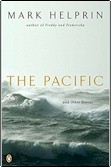
I have been reading novels for more than seventy years, and the greatest novel I have ever read (have you marked these italics?) is Helprin’s 860-page masterpiece, A Soldier of the Great War, which is his War and Peace. I’ve read a number of his other books as well, and they are all superbly crafted works of art. Indeed his writing routinely elicits the most extravagant but wholly deserved praise from critics and readers alike. Just last night, I was reading one of the marvelous stories in one of his collections of short fiction in a book entitled The Pacific. This one, simply called "Monday," caused me to choke up and become teary-eyed at the end. And I’m a guy (just in case you had noticed)! The sheer beauty of his writing as well as the emotional power of Helprin's writing will do that do you.

The Pacific
Well, had I time and you patience, I could write reams about Helprin -- and about his politics, which is another matter -- but perhaps I have already said enough to intrigue you. If so, I invite you to check him out. After all, unless you are having to mind your kids or dealing with the hardship of illness, you may have time on your hands now. If that’s the case, why not put your hands to good use and deploy your eyes at the same time in reading one of Helprin's books?

Another thing I’ve been doing is avoiding the news. Ah, the pleasures of tuning out! But the other night my girlfriend Lauren found herself raptly watching PBS's The News Hour while I was busy doing the equivalent of filing my Howard Hughes-like nails. Naturally, afterward I was impelled to launch into another one of my tedious diatribes about the toxicity of our virus-laden news feeds that only wants to make you consider killing yourself before the virus gets to you. But shortly thereafter, I was struck not by lightening, and, thank heaven, not by the virus, but by a serendipitous synchronicity, which will soon be revealed.

Anita Moorjani is a now well-known NDEr, author and self-help guru. It was her first book, Dying to Be Me, which brought her to my attention and eventually to my home where I was lucky to spend four hours with her and her husband, Danny, mostly laughing, as I recall. Anita is an absolutely delightful person and has now amassed a large and devoted following. In that connection, she sends out periodic newsletters to her fanship among whom I include myself. Anyway, not long after I had vented my spleen to Lauren, I found one of Anita's newsletters on my computer and what did I find from this sage woman? Simply this passage:

Everything feels very calm and peaceful both in my home and outside, however, the minute you turn on the news, every channel is reporting the same thing. And the news at the moment has all the essential components to raise our anxiety levels to the point of making us feel like we are fighting for our lives. I have some friends who are news junkies, and their stress levels are through the roof right now. When you are constantly bombarded with doom and gloom news and your stress levels go through the roof, it puts your body into "fight or flight". This means that your body goes into survival mode, and when it does that, your immune system is not at its best.
Well said, Anita! Thank you. So if Lauren won’t listen to me, maybe she will pay heed to Anita. Maybe you will, too.

Of course, you don’t have to be an NDEr to realize that listening to the news is bad ju-ju for the soul, but one of the interesting things about NDErs is that after their close encounter with death, many of them become psychic, often to an uncanny extent as my research and that of others have revealed. One of the ways their psychic gifts may manifest is in precognitive visions -- apparently seeing an event before it actually occurs. For example, several NDErs reported that they had foreknowledge of the Space Shuttle Challenger before it exploded in 1986.

Which brings us to another NDEr, Sylvia Browne. But I never knew Sylvia, who died in 2013. Indeed, despite the fact that she wrote over forty books and was a very well known if controversial psychic, appearing on many television shows during her life, I had never even heard of her until this year, and you will soon understand why. The reason will, I’m afraid, bring us back to the corona virus and bring our brief spring break to an astonishing end.

You see, nearly twelve years ago, Sylvia foresaw the corona virus. You don’t believe it? Neither did I at first, but read on.

In 2008, Sylvia Browne wrote a book called End of Days. In that book she predicted:
"In around 2020 a severe pneumonia-like illness will spread throughout the globe, attacking the lungs and the bronchial tubes, and resisting all known treatments."
Weird, eh?

She also made some other seemingly startlingly accurate or at least plausible predictions for this same time including the crash of the stock market and, most alarming of all, this one:
"The year 2020 will mark the end of the U.S. presidency and the executive branch of the government."
Not to get too political, but of course people have wondered how our pandemic might affect the election and whether if things should really spin out of control, President Trump might invoke martial law or other extreme measures that could imperil our government. At this point, the future is as uncertain as is the course of the corona pandemic itself.

But let's not get carried away on the wings of wild speculation. For one thing, like all psychics, Sylvia Browne’s predictions were often wrong, sometimes spectacularly so. In her lifetime, she was a highly controversial figure. And even what she did have to say about the course of the pandemic itself should give us pause because she also added this to her prediction:
"Almost more baffling than the illness itself will be the fact that it will suddenly vanish as quickly as it arrived, attack again ten years later, and then disappear completely."
Alas, that doesn’t seem to be the case at all as far as the course of this pandemic is concerned, but if, against all odds, Sylvia should prove right about this as well, what would we think then?

A Brief Addendum


Lest you think from my remarks on the dangers of exposing oneself to the news about the virus that I insulate myself from it, you couldn’t be more wrong. Of course, I follow the news as much as I need to. I am very well aware that almost 150,000 Americans have contracted the virus, that thousands in the U.S. have already died and that perhaps as many as 200,000 here will die of this disease. And that many thousand throughout the world have died and perhaps three quarter of a million of the earth’s population have been sickened. So much for the stats thus far. And they will get worse.

And then there are the thousands of health care workers on the front lines and in the trenches of this horrible war whose health is imperiled, the hospitals stretched beyond capacity, the massive number of people are suffering, including some friends of my own. And so on into the dark night. I have heard these heart-sickening stories and like everyone I am anguished by them.

But I figure we all know that. I don’t think you need to read more blogs about this. Distraction, entertainment, humor, music, reading, etc., are also weapons we can deploy in our fight against this remorseless enemy. We need to keep our bodies safe, of course, but we also keep to keep our spirits up. Which is why for the most part you won’t find me mentioning all the bad news in my blogs. Just so you know...

March 27, 2020

Are We Having a Collective NDE?


By Kenneth Ring, Ph.D.

If you’ve been following my blogs, you may remember that in my first one, "An NDE Researcher Ruminates about Death in the Time of COVID-19," I drew on some correspondence with a graduate student who wondered whether because of the widespread nature of this virus we were undergoing what she called a "collective NDE." So imagine my surprise when last night I received this note from a woman who herself had survived an NDE:
I was inspired to write you because I thought of you directly as it started to dawn on me that we might be living through a collective near-death experience.
I had my NDE at sixteen and was transformed forever, and now as I am listening to people describe their experience with this "pandemic time" I can't help but feel like millions of us are having similar processing experiences, life reviewing, atemporal experience, waves of spiritual connection -- and it seems like we will move to the other side of this profoundly affected as such. Purpose is emerging, importance of connection... etc.
Having had two such inquires recently both of which used the same expression, "a collective NDE," got my attention and caused me to exercise what’s left of my brain in a little reflection.

As my most recent correspondent indicated, NDEs have the power to bring about a profound transformation. My research and that of others have offered abundant evidence that NDEs tend to lead to radical changes in one's values and behavior such that NDErs become more loving and compassionate and decidedly more spiritual. So if the very specter, horrifying as it is, of possibly widespread death and certainly even the worldwide fear of death were to usher in a planetary NDE, so to speak, might we reasonably expect that humanity -- at least those who survive -- would be similarly transformed?

It is a comforting thought to suppose that when this black cloud of the virus finally lifts, we might, as a species, reap the benefits of the light of a collective NDE.

To me, personally, it is a slender reed of hope to cling to since it is entirely possible, and perhaps even more likely, that all the survivors of this ordeal will reap is a collective case of PTSD, owing to the pervasive trauma that this virus can be expected to inflict on us. Even so, there is plenty of evidence that trauma, even seemingly soul-destroying ones, can nevertheless lead to astonishingly positive personality changes and spiritual growth. So it is at least conceivable that when humanity emerges from its current trauma, it too may find itself in a nascent state of spiritual renewal with an undeniable sense of deep connection to all the peoples of the earth who together will then have to fashion a planet where love for one another and all life must reign.

A utopian dream perhaps, but in these dark dystopian days, it is at least something to think about. And if this kind of transformation should come about, we will have reason to give heartfelt thanks. In the meantime, I plan to cling to that slender reed of hope, and maybe if enough of us do, the dream will one day become the reality of our lives.